You spent millions on it. You spent months — maybe years — implementing it. You migrated your legacy systems, retrained your staff, and sat through more vendor demos than you care to remember. Your ERP was supposed to be the single source of truth that finally gave leadership the visibility they needed to make smarter decisions.
So why does every board meeting still start with someone asking, “Where did these numbers come from?”
The uncomfortable reality is that having data and having insights are two very different things. ERPs are extraordinary at capturing transactions. They’re far less extraordinary at turning those transactions into the kind of forward-looking, decision-ready intelligence that modern businesses actually need. Here’s why the gap exists — and what it takes to close it.
1. Your ERP Was Built to Record, Not to Interpret
Enterprise resource planning systems were architected around a core mission: capture every financial transaction, inventory movement, and operational event with precision and auditability. They do this exceptionally well. But the mental model baked into most ERP design is that of a ledger — a reliable record of what happened.
Insights, by contrast, require a different kind of thinking. They ask why something happened, what’s likely to happen next, and what you should do about it. That kind of synthesis is not what ERP vendors have historically optimized for. The standard reports that ship out of the box are designed to satisfy compliance and close the books — not to surface the operational anomalies your VP of Supply Chain needs at 8am on a Monday.
This isn’t a failure of your ERP. It’s a category mismatch.
2. The Data Is There — But It's Structured for Machines, Not Decisions
Ask your ERP for a list of open purchase orders and it will return one in seconds. Ask it why your gross margin has been quietly eroding over the last six quarters while revenue climbed, and you’ll be greeted with the blank stare of a system that doesn’t think in those terms.
Most ERP data lives in normalized relational tables designed for transactional integrity, not analytical exploration. To answer a question like “which customer segments are becoming less profitable?” you typically need to join dozens of tables, apply business logic that lives nowhere in the system, and then present results in a format a human can actually absorb. Each of those steps introduces friction — and most companies lack the internal resources to do it at the speed the business demands.
The data is imprisoned in a structure that made perfect sense when the goal was accurate record-keeping. That same structure becomes a barrier the moment your goals shift toward understanding.
3. Too Many Cooks in the Data Kitchen
Here’s a scenario that plays out constantly in mid-market and enterprise companies alike: Finance pulls an ERP report for monthly revenue. Sales pulls their own numbers from the CRM. Operations is working off a spreadsheet someone built three years ago that everyone knows is “close enough.” Leadership sits in a room with three different figures on the table and spends the first forty minutes of a two-hour meeting arguing about which number is right.
ERP data doesn’t exist in isolation. It needs to connect to data from your CRM, your HRIS, your e-commerce platform, your 3PL, and often a fleet of spreadsheets that have become load-bearing infrastructure over the years. Without a deliberate integration and governance layer, every team ends up doing their own version of the truth — and collective decision-making becomes nearly impossible.
This isn’t a data quality problem. It’s an architecture problem dressed up as a data quality problem.
4. Standard Reports Are a Rearview Mirror
The out-of-the-box reporting in most ERPs is oriented almost entirely toward historical reporting. Profit and loss, balance sheets, aging receivables, inventory on hand — all of it is a snapshot of where you’ve been. That’s valuable. But it’s not sufficient for companies operating in environments where conditions shift quickly.
What leaders increasingly need is the ability to ask forward-looking questions: Which customers are at risk of churning based on payment behavior changes? Which SKUs are likely to go out of stock before the next replenishment cycle? Where are we trending against budget, and why?
Answering those questions requires blending historical ERP data with predictive models, external signals, and real-time operational feeds — none of which your ERP was designed to accommodate natively.
5. The Report Request Backlog Is Strangling Agility
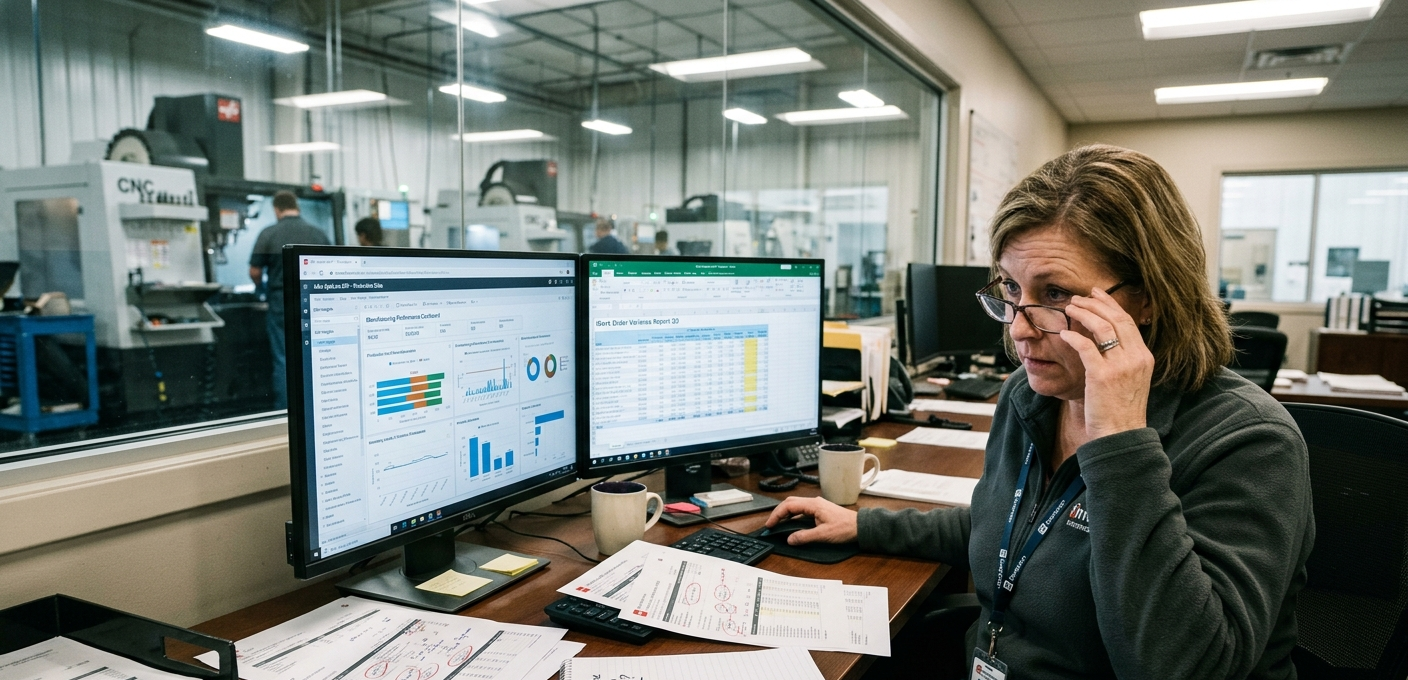
In most organizations, there’s a small group of people — often sitting in Finance or IT — who know how to actually get data out of the ERP in a useful form. Everyone else files a ticket and waits. By the time the report arrives, the business question that prompted it has often already been answered by someone’s gut feeling or moved on entirely.
This dynamic creates a dangerous lag between the moment a question emerges and the moment data can inform the answer. It also creates learned helplessness. People stop asking for data because they’ve learned the process is too slow to be useful. They stop trusting the data because by the time it arrives, it feels stale. And they stop making data-driven decisions because the infrastructure isn’t responsive enough to support that behavior.
The bottleneck isn’t the data. It’s the access model.
What Closing the Gap Actually Looks Like
None of this means your ERP investment was a mistake. It means the ERP is one layer of a larger data and analytics stack — and that layer needs to be complemented deliberately.
Companies that successfully convert their ERP data into genuine business intelligence tend to do a few things differently:
They build a semantic layer. Rather than querying raw ERP tables, they invest in a business intelligence layer that maps complex database structures to business-friendly concepts: “revenue,” “customer lifetime value,” “days sales outstanding.” This makes the data accessible to people who understand the business but not the underlying schema.
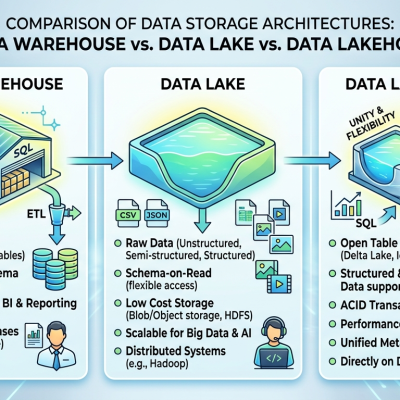
They integrate broadly but govern tightly. They connect ERP data to the other systems of record that matter — CRM, HRIS, logistics platforms — through a centralized data warehouse or lakehouse, with clear ownership over definitions and refresh cadences. One version of the truth, accessible from one place.
They invest in self-service tooling. They put intuitive analytics tools in the hands of business users — people in operations, sales, and finance — who can explore data independently without filing a ticket. The data team becomes an enabler rather than a bottleneck.
They separate operational reporting from strategic analysis. Closing the books and understanding the business are different activities that deserve different tools and different workflows. Companies that conflate the two end up with systems that do neither particularly well.
They treat insights as a product. The most analytically mature organizations don’t think of reporting as a side function. They treat the insights their data produces as a product with stakeholders, roadmaps, and quality standards — built and iterated on like any other product the business depends on.
The Bottom Line
Your ERP was never going to be enough on its own. It was designed to run the business, not to explain it. The companies pulling ahead aren’t the ones with better ERPs — they’re the ones that have built the surrounding infrastructure to unlock what their ERP already knows.
The data is there. The question is whether you’ve built the systems, the processes, and the culture to turn it into something your leadership team can actually act on.
If the answer is not yet, that’s not a failure. It’s the next project.