
The gap is widening. Manufacturers who embedded data-driven decision-making early are compounding their advantage every quarter — shorter cycle times, fewer unplanned stoppages, tighter yield windows. The laggards, meanwhile, are managing the same fires they were managing five years ago, only with more expensive fuel.
This isn’t about budget. We’ve seen lean mid-market shops outpace well-funded competitors twice their size. The differentiators are structural and behavioral — and they’re surprisingly consistent once you know what to look for.
They Don't Wait for Perfect Data
The single most common stall pattern we observe: an organization spends 12–18 months trying to “get the data right” before building a single dashboard or running a single model. By the time they’re ready to act, the business problem has evolved and internal momentum has collapsed.
Fast adopters think differently about data quality. They accept that shop-floor data will be messy, timestamped inconsistently, and occasionally missing. Rather than treating that as a prerequisite problem, they treat it as an engineering constraint — something to work around while still extracting value.
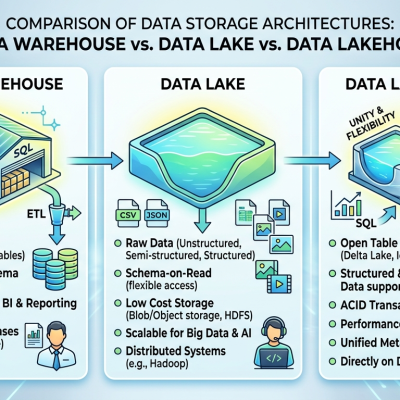
In practice, this means building anomaly detection and OEE tracking on imperfect sensor streams, then iterating as data pipelines mature. The organizations that wait for a clean data lake to fill up before doing anything are the same organizations still waiting.
They Have a Designated "Translator" Role
The fastest-adopting plants we’ve worked with almost universally have someone — sometimes a team, sometimes one person with unusual range — who can move between the production floor and the analytics environment without losing fidelity in either direction.
This role is rarely a data scientist. It’s more often a process engineer who learned SQL, or a shift supervisor who got embedded in a digitization project and never went back. The title doesn’t matter. What matters is the capacity to take a machine operator’s complaint about a chattering tool and translate it into a feature engineering question — and then translate the model’s output back into something the operator can act on during a shift.
Organizations that try to bridge this gap with consultants alone rarely sustain progress. The translator has to be internal, embedded, and trusted by both sides of the divide.
They Solve Expensive Problems First, Not Easy Ones
There’s a seductive trap in analytics adoption: picking use cases that are technically tractable rather than economically meaningful. Visualizing downtime trends is easier than predicting them. Reporting scrap rates is easier than tracing them to a specific machine condition. The easy wins feel like progress but rarely build organizational conviction.
The fast movers do the opposite. They inventory their top five cost drivers — unplanned downtime, rework, energy waste, raw material yield loss, overtime — and pick the most painful one with any reasonable data signal attached to it. Then they go after it with an initial model that doesn’t have to be good, just directionally useful.
A $40,000-per-incident compressor failure that happens three times a year is worth an imperfect predictive maintenance model. A five-minute changeover improvement isn’t worth six months of engineering time. Fast adopters are ruthlessly focused on value density.
Their Leadership Has Skin in the Model
Every analytics initiative we’ve seen stall had the same characteristic: senior leadership treated it as an IT project. Every initiative we’ve seen accelerate had executives who were personally tracking at least one output from the analytics system — and making at least some decisions based on it.
This isn’t just symbolic. When a plant manager is looking at predicted yield by shift in their morning review, three things happen automatically: the data gets cleaned faster (because errors surface immediately), the operations team takes the outputs more seriously, and the business case for expanding the system writes itself.
The inverse is equally true. When executives delegate all analytics decisions to a data team that reports two levels down, the work struggles for resources, visibility, and organizational permission to change anything that matters.
They Instrument the Why, Not Just the What
A lot of manufacturing analytics programs are sophisticated at measuring outcomes and unsophisticated at capturing causes. They know exactly how much scrap they produced last quarter. They don’t know if that scrap was driven by incoming material variation, a tooling issue, an operator behavior pattern, or a temperature drift during a specific shift window.
Fast adopters invest disproportionately in causal instrumentation. They add sensors at inflection points, not just endpoints. They capture process parameters at decision junctures, not just final inspection. They tag production runs by operator and crew, not just by product and date.
The result is that their models can actually explain variance, not just report it. And when a model explains variance, operators can act on it — which is the entire point.
They Build for Adoption From Day One
The fastest-adopting manufacturers treat operator adoption as a design constraint, not an afterthought. Before a model goes live, they’ve already answered: Where will this output appear? What action does it prompt? Who sees it, and when? How does the operator override it, and how does that override get logged?
This is fundamentally different from the common pattern of building a model in a BI tool, publishing a dashboard, and hoping the floor will find it useful. Sophisticated adoption-focused teams often start by shadowing operators for a week before writing a line of code — understanding the actual information environment during a shift, where attention is, what inputs are available, and what the friction points are in current decision-making.
- Outputs surface where operators already work — embedded in MES screens, visible on floor monitors at the machine, pushed via SMS for critical alerts — not locked inside analytics platforms no one checks during production.
- Actions are pre-defined and specific. Not “investigate this asset” but “check the lube level on bearing #4 before the next run.” Specificity drives compliance.
- Feedback loops are baked in. When an alert fires and the operator responds — or doesn’t — the system captures it. Models improve. Trust builds. Adoption compounds.
They Measure Adoption as Rigorously as Accuracy
A predictive model that’s 92% accurate and ignored by the team it was built for is worth exactly nothing. The fastest-adopting manufacturers understand this at an organizational level. They track how often alerts are acted on, how quickly, and whether acting on them correlates with the outcome the model predicted.
This forces accountability in both directions. If operators are ignoring the model, that’s a signal — either the model is crying wolf, the output format isn’t surfacing in the right context, or there’s a trust deficit that needs to be addressed directly. If operators are following recommendations and outcomes aren’t improving, the model needs work.
The organizations that measure adoption alongside model performance close feedback loops faster. Their systems improve faster. Their operators trust faster. The compounding advantage this creates over two or three years is significant.
The Common Thread
What runs through all of these behaviors is a refusal to treat analytics as a technology problem. The fastest-adopting manufacturers treat it as an operations problem — one that happens to be solved with data.
They don’t buy software and wait for transformation. They start with a painful business problem, find the data signal that’s already there, put the output in front of the person who can act on it, and measure whether it’s working. Then they do it again, on the next problem, with a slightly better data foundation than they had before.
That loop — problem, signal, output, action, measurement — is what separates the manufacturers who are compounding their advantage from the ones still wondering where to start.
If you’re trying to figure out which category your operation is in, that’s usually a good place to begin the conversation.