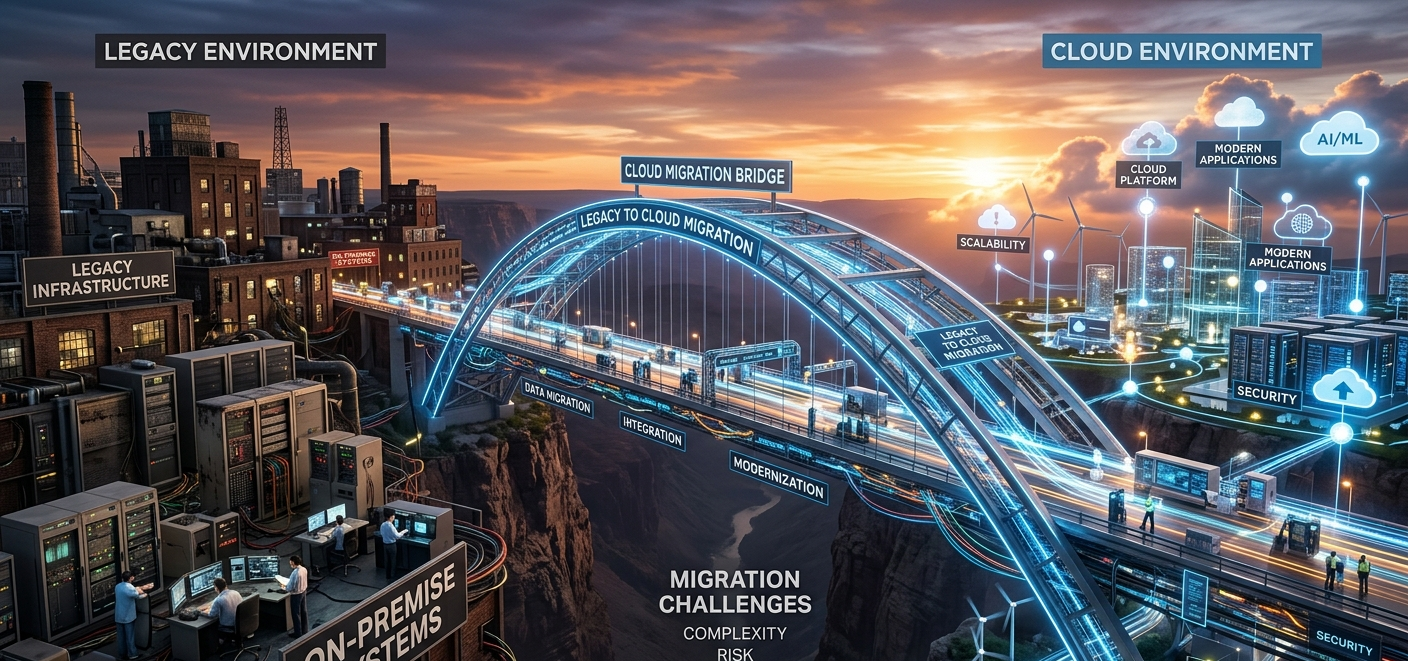
Walk onto almost any production floor in North America and you’ll find the same paradox: equipment running on protocols engineered in the 1980s sitting thirty feet away from a dashboard streaming real-time analytics to the cloud. The factory of the future and the factory of the past are operating simultaneously — and the companies winning right now are the ones who’ve learned to make them talk to each other.
For years, the conversation around manufacturing digital transformation was dominated by a false choice: rip out your legacy PLCs and SCADA systems and replace them entirely, or stay analog and fall behind. Neither option was realistic. Legacy capital equipment carries amortization schedules measured in decades, not fiscal quarters. And the institutional knowledge baked into these systems — the tuned parameters, the alarm logic, the safety interlocks — can’t be replaced with a software migration over a weekend.
What’s emerging instead is a more pragmatic, layered approach. One that treats existing operational technology (OT) not as a liability to be retired, but as a data source to be unlocked.
The Integration Stack Nobody Talks About
The technical challenge is real, but it’s often mischaracterized. The problem isn’t that legacy systems are dumb — many PLCs and DCS platforms contain extraordinarily precise process data. The problem is that this data was never designed to leave the plant floor. It speaks in Modbus, PROFIBUS, OPC-DA, and proprietary vendor dialects. Modern cloud platforms speak REST, MQTT, and Kafka. The translation layer between them is where most integration projects live and die.
The manufacturers making the most progress have adopted what we call a “connectivity-first” architecture. Rather than starting with a cloud platform selection and working backwards, they begin by mapping every data source on the production floor — identifying what data exists, at what frequency, and with what historical context — before a single line of cloud infrastructure code is written.
The Four Approaches We're Seeing Work
- Edge computing as the bridge. Industrial edge devices — ruggedized compute nodes that sit between the OT network and the IT/cloud layer — handle protocol translation, data buffering, and local processing. They can run analytics models locally when connectivity is unreliable and sync to the cloud when bandwidth is available. This is particularly powerful for remote or bandwidth-constrained sites.
- OPC-UA as the lingua franca. The OPC Unified Architecture standard has matured into the closest thing manufacturing has to a universal data protocol. Retrofitting legacy equipment with OPC-UA server modules — often without replacing the underlying hardware — creates a structured, semantic data stream that modern cloud platforms can ingest natively.
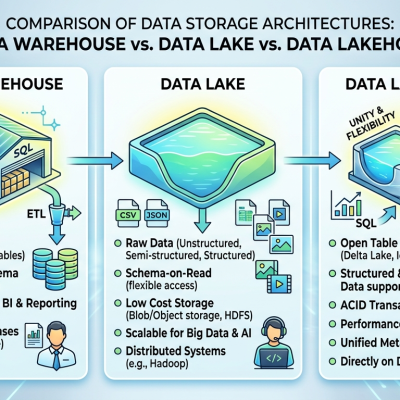
- Historian modernization, not replacement. Industrial historians (OSIsoft PI, Wonderware, Aspen) have been the de facto data lake of manufacturing for thirty years. Rather than migrating away from them cold, leading manufacturers are deploying cloud connectors that stream historian data into modern time-series databases and data lakes in parallel — preserving continuity while opening data to modern ML workloads.
- Digital twin as the integration test bed. Before touching production systems, manufacturers are building digital twins of their physical processes — virtual models that can be connected to both legacy data feeds and proposed cloud architectures. This de-risks integration dramatically and gives engineering teams a safe environment to test analytics models against real process data.
The Organizational Barrier Is Bigger Than the Technical One
In nearly every engagement our team works on, the technology proves more tractable than the org chart. Legacy OT environments are typically owned by operations, maintenance, or engineering teams — groups that have spent careers optimizing uptime and are rightly suspicious of IT-driven initiatives that could introduce instability. Cloud infrastructure, meanwhile, lives in IT or digital transformation functions that may have little understanding of Purdue model network segmentation or why you absolutely cannot put a PLC directly on the internet.
The manufacturers who bridge this gap successfully tend to share a structural common denominator: a dedicated OT/IT convergence team with authority that spans both domains. Not a steering committee. Not a working group. A standing team with real accountability for both production continuity and data modernization outcomes simultaneously.
Security Can't Be Bolted On
Every manufacturer we work with that has successfully connected legacy OT to cloud infrastructure has confronted the same uncomfortable truth: their OT network security posture was built for an era of air gaps, not connectivity. Legacy SCADA systems often run end-of-life operating systems. PLCs may have no authentication. Industrial protocols were designed for reliability, not security.
This isn’t a reason to stop the integration project — it’s a reason to sequence it correctly. Network segmentation, unidirectional security gateways, and zero-trust access controls for remote monitoring need to be architectural prerequisites, not afterthoughts. The cloud connection creates an attack surface that didn’t previously exist, and the consequences of a compromise in a manufacturing environment extend well beyond data loss into physical safety and production disruption.
What the Leading Edge Looks Like
The manufacturers operating at the leading edge of this convergence aren’t necessarily the ones with the newest equipment. Some of the most impressive implementations we’ve seen involve 1970s-era casting equipment streaming process data through an edge layer into cloud-based anomaly detection models that have cut unplanned downtime by over 30%.
What they share is a commitment to treating data as a first-class manufacturing asset — with the same rigor applied to data quality, data lineage, and data governance that they apply to material quality on the line. When a sensor reading is off, they want to know if it’s a process deviation or a data collection problem. That level of data fidelity is what separates descriptive analytics from the predictive and prescriptive capabilities that actually move the needle on production economics.
The gap between legacy and cloud is real, but it’s closable. The manufacturers who understand that the goal isn’t to modernize for its own sake — but to unlock the data trapped in decades of operational experience and put it to work — are the ones finding their way across it.