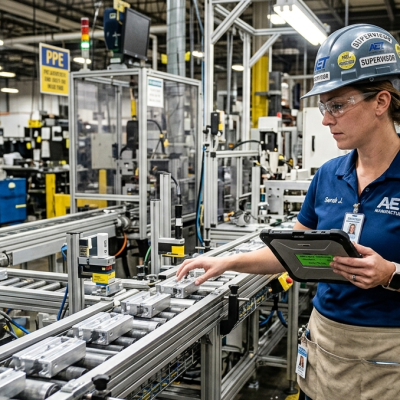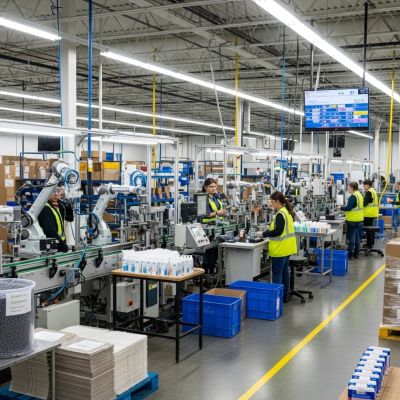
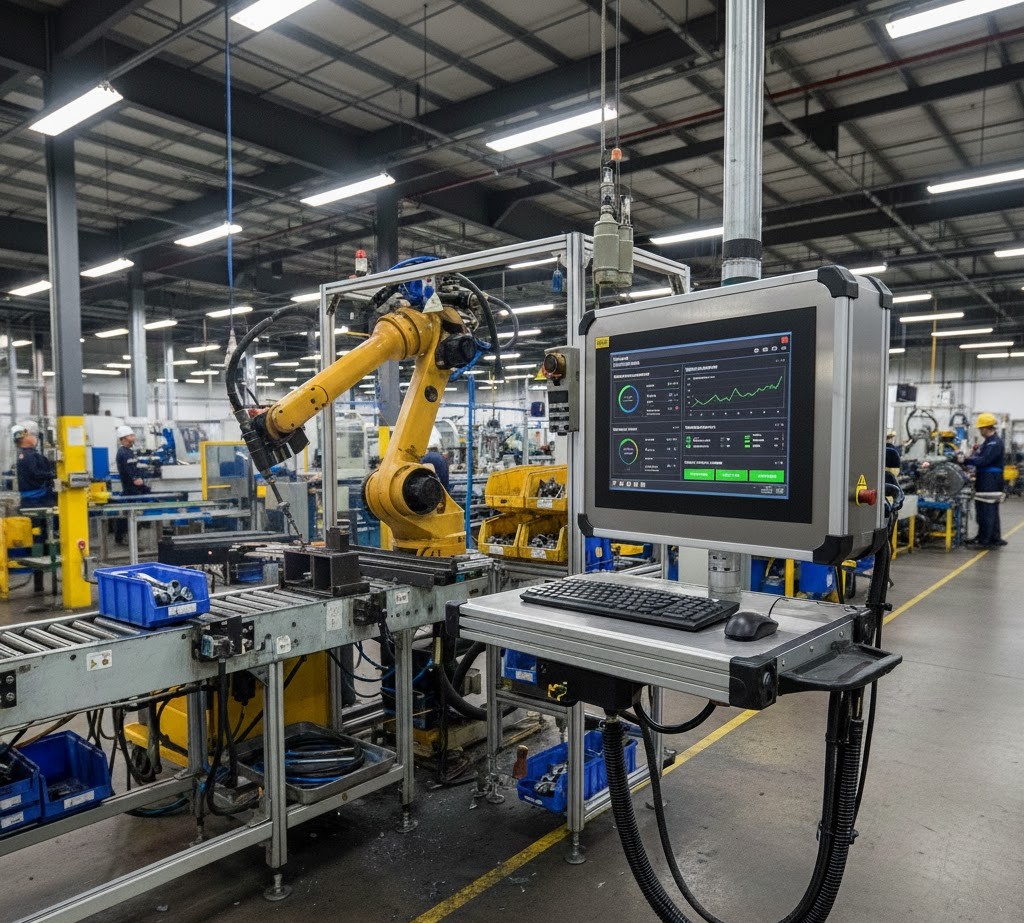
Implementing a Manufacturing Execution System (MES) offers significant benefits that extend far beyond basic operational efficiency, positioning manufacturers for long-term competitive advantage in an increasingly digital landscape. By providing real-time visibility into production processes, MES enables agile decision-making, optimizes resource allocation, and minimizes downtime. This ultimately helps drive higher yields and reduced operational costs while ensuring compliance with stringent regulations like those in pharmaceuticals. This real-time data integration fosters enhanced quality control, faster time-to-market for new products, and streamlined workflows that reduce inventory levels and labor expenses, allowing companies to respond swiftly to market fluctuations and customer demands. Moreover, MES empowers data-driven insights for predictive maintenance and continuous improvement, transforming manufacturing from a cost center into a strategic asset that boosts overall productivity, innovation, and profitability in dynamic global supply chains.
Whether you’re a small manufacturer dipping into digital transformation or a large enterprise optimizing global operations, the options boil down to on-premises (on-prem), cloud, or hybrid. In this post, we’ll break down the pros and cons of each, provide a decision framework, and dive into the often-overlooked debate of custom software development versus off-the-shelf SaaS solutions.
Understanding MES Deployment Models
MES software tracks production in real-time, manages workflows, ensures quality, and integrates with ERP systems. Deployment models refer to how the software is hosted and accessed. On-prem keeps everything in-house on your servers; cloud leverages remote providers like AWS or Azure; hybrid combines both for a balanced approach. No one model is the best option for everyone, but rather it depends on each manufacturer’s unique circumstances including size, industry, regulatory requirements, and product mix.
On-Premises Deployment: The Traditional Powerhouse
On-prem MES involves installing the software on your local servers and infrastructure. On-Premise has been the historical option that power many legacy systems. It’s been the go-to for decades, especially in regulated industries like aerospace and pharmaceuticals where data sovereignty is paramount.
Pros
- Full Control and Security: You own the data and hardware, minimizing risks from external breaches. Ideal for compliance with standards like FDA 21 CFR Part 11 or ITAR, as everything stays within your network.
- Low Latency and Reliability: Perfect for real-time operations; no internet dependency means uninterrupted access during outages.
- High Customization: Easily tailor the system to unique workflows without vendor restrictions.
- Unlimited Data Retention: Store historical data as long as needed, with no caps on signals or storage.
Cons
- High Upfront Costs: Expect significant CAPEX for servers, licenses, and implementation—plus ongoing maintenance by your IT team.
- Limited Scalability: Expanding to new sites requires more hardware, leading to silos and complex management.
- Slower Deployment: Rollouts can take months due to setup and contracts.
- Maintenance Burden: Your team handles updates, backups, and troubleshooting, diverting resources from core operations.
On-prem shines for businesses prioritizing control over convenience, but it has continued to lose ground to more agile alternatives over the past several years.
Cloud Deployment: The Agile Innovator
Cloud MES is hosted on remote servers by providers, accessed via the internet. It’s gaining significant market share and the modern go-to option, especially with the proliferation of web-based applications, either tailor made or through a SaaS model.
Pros
- Rapid Scalability and Deployment: Set up in hours, not months; easily expand across sites without physical infrastructure.
- Lower Entry Costs: Subscription-based OPEX model covers maintenance, updates, and backups—no need for on-site servers.
- Enhanced Accessibility and Analytics: Centralized data enables real-time enterprise reporting and AI integrations like predictive maintenance.
- Automatic Updates: Vendors handle patches and features, reducing IT workload.
Cons
- Internet Dependency: Outages can disrupt access, though mitigated by protocols like MQTT.
- Security Concerns: Data on external servers; relies on vendor protections making the cloud vendor decision of paramount importance when data security is critical.
- Limited Customization: Less flexibility for bespoke integrations; data retention and signal limits can apply.
- Latency Issues: Potential delays in real-time control, though improving with 5G and edge tech.
Cloud is ideal for dynamic manufacturers seeking speed and cost-efficiency, especially with the current emphasis on remote monitoring.
Hybrid Deployment: The Best of Both Worlds
Hybrid MES blends on-prem for critical operations with cloud for scalability and analytics. It’s a pragmatic choice for transitioning legacy systems.
Pros
- Balanced Uptime and Scalability: Local reliability for shop floor tasks, cloud for global insights and failover.
- Cost Optimization: Mix CAPEX/OPEX; reduce on-site IT while leveraging cloud resources.
- Smooth Transition: Bridge to full cloud without disrupting operations; supports IIoT and AI gradually.
- Redundancy: Continues functioning locally if cloud connectivity fails.
Cons
- Increased Complexity: Managing dual environments requires expertise in integration and functionality placement.
- Higher Costs: Combines expenses from both models, including potential redundancies in infrastructure.
- Limited Flexibility for Advanced Tech: Still tied to monolithic elements, less ideal for pure microservices.
Hybrid is surging in 2025 as a “lift and shift” strategy for manufacturers with legacy investments.
Decision Framework: Which Model Fits Your Needs?
To choose, assess your priorities: security, budget, scale, and tech maturity. Here’s a comparison table:
| Aspect | On-Prem | Cloud | Hybrid |
|---|---|---|---|
| Cost Structure | High CAPEX, lower long-term | Low entry, subscription OPEX | Mixed CAPEX/OPEX |
| Deployment Speed | Slow (months) | Fast (hours/days) | Medium (weeks) |
| Scalability | Limited, hardware-dependent | High, elastic | Balanced, flexible |
| Security | High control, on-site | Vendor-dependent | Combined, customizable |
| Customization | Extensive | Available | Moderate |
| Best For | Regulated industries, legacy ops | Agile SMBs, multi-site | Transitioning enterprises |
Factor in cybersecurity (e.g., rising ransomware), latency needs, and regulatory constraints. For instance, if you’re in healthcare manufacturing, on-prem or hybrid might be safer.
Custom Software Development vs. Off-the-Shelf SaaS: Tailored vs. Ready-Made
Beyond deployment, deciding between building a custom MES or buying an off-the-shelf SaaS product is crucial. Custom development creates software from scratch, while off-the-shelf SaaS offers pre-built, subscription-based solutions.
Off-the-Shelf SaaS
- Pros: Quick deployment and lower initial costs; solves standard problems with vendor support, updates, and reliability. Ideal for basic needs in small operations.
- Cons: Limited customization forces process adaptations; may not scale or integrate well as you grow; lacks competitive edge since competitors use the same. Data collection can be manual and unreliable.
Custom Software Development
- Pros: Fully tailored to your workflows, SOPs, and automation (e.g., IIoT for real-time tracking); scalable with integrations; provides proprietary advantages and better ROI long-term.
- Cons: Higher upfront costs and longer timelines; high failure risk (up to 90% if workflows aren’t clear); requires experienced developers and ongoing maintenance.
In MES contexts, off-the-shelf suits standardized processes, while custom excels for complex, high-mix environments. Combine with your deployment choice—e.g., custom on hybrid for ultimate flexibility.
Selecting the Right Partner for Custom MES Development Projects
Luckily, you don’t have to do it alone. Software development agencies like Lasso specialize in building custom software, like MES systems, for SMB manufacturers. Lasso can guide you through the entire process and deliver a solution custom made to your businesses needs. If you’re ready to transform your operations, start by assessing your needs and consulting experts. Lasso is here to support you every step of the way – get in touch below!
You might also like
- All Posts
- Cloud Data Infrastructure
- Cloud Web Applications
- Digital Manufacturing Strategy
- Implementation & Best Practices
- Manufacturing Industry Insights
- Operations Analytics
- Supply Chain Management